THE HISTORICAL & MYSTICAL IN EAST AND WEST
(Friday, December 26)
“And the Word became flesh and dwelt among us, and we beheld His glory, the glory as of the only begotten of the Father, full of grace and truth.” (Jn 1:14)
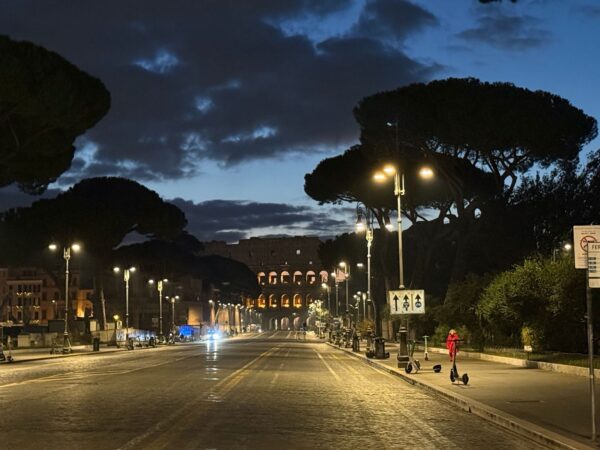
Here’s one interesting tidbit I observed this year, having seen (for the first time) the beautiful celebration of Christmas in Rome. In Roman Catholic churches, the beginning of the Gospel according to John (“In the beginning was the Word…”) is the Gospel-reading for Christmas Day. This is different from the Orthodox (Byzantine) tradition, in which we read the beginning of John not on Christmas, but on Pascha.
In both cases, in the Western and Eastern traditions, this reading is accentuating that the Event at hand (either Christmas or Pascha) is a new beginning, because its first words, “In the beginning was the Word,” echoes the beginning of creation in the Bible, which says, “In the beginning God created the heavens and the earth.” And it is focusing our attention not on the ‘historical’ aspect of the Event (that is, not on the Gospel-narratives about the birth in Bethlehem or about the resurrection), but on the ‘mystical’ aspect of it; on its ‘glory.’ Conversely, the Gospel-reading for Christmas Day in the Orthodox tradition (Mt 2:1-12, the visit of the Magi), and the Roman Catholic reading for Easter Sunday (Jn 20:1-9, Mary Magdalene and the disciples at the empty tomb) focus on the ‘historical’ narratives about the Event.
While many tend to see the Eastern Christian tradition(s) as more ‘mystical’ than ‘historical,’ and the Western ones as more ‘historical,’ generally speaking, the above examples are just one indication that this is not the case. Let’s note that both traditions have readings and hymns (in the days leading up to both feasts) that cover both their ‘historical’ and ‘mystical’ aspects, so, the readings of the main day of the feast do not paint the full picture of how the feasts are celebrated. Another thing to note is, regardless of the readings and hymns chanted in church, they only affect its celebration insofar as we, the people celebrating in either East or West, pay attention to them. We do have in both traditions the liturgical systems (in the readings and hymns, the rites and customs) both to engage the ‘historical’ or the ‘story’ of the Event, and to ‘go deeper’ into its ‘mystical’ aspects, but it takes some work outside the liturgical celebrations to educate ourselves in these matters. These are just some thoughts on a huge topic, my friends. Merry Christmas and/or St. Stephen’s Day (celebrated today in Western traditions, but tomorrow in the Orthodox/Byzantine calendar)!